CorporateLeaser.com · Bad Credit Housing
Bad Credit Lease Agreements: What to Read Carefully

A lease can look like a path to housing, but it is also a contract controlling what you pay, who may live there, and what happens if plans change. When credit limits your choices, it can be tempting to sign quickly. That is when a careful read matters most.
Bad credit lease agreements are not a separate legal category. They are ordinary rental agreements offered to an applicant whose credit, rental history, income, or screening profile may lead a property to ask for different terms. Requirements vary by property and by state or local law. Read the document you will actually sign, not only an advertisement promising “second chance” housing.
This guide is educational, not legal, credit-repair, or financial advice. If a clause is unclear, ask a qualified housing attorney or legal-aid provider before signing.
Start with the parties and the home
Confirm the exact legal names of every party. The lease should identify the landlord or property owner, the tenant or tenants, and the address and unit being rented. If a company, guarantor, or corporate leasing provider is involved, ask who is signing the lease and who is responsible for rent, damage, notices, and compliance with property rules.
Check the term next. Write down the start date, end date, renewal process, notice deadline, and whether the agreement converts to month-to-month. A “flexible” arrangement may still require advance notice or charge different rent after the initial term. Make sure the unit and included features match what you were shown.
Read every dollar, not just the monthly rent
The first page may highlight rent, while the real cost is spread across sections. Look for:
- Monthly rent, due date, grace period, and accepted payment methods
- Security deposit, nonrefundable fees, and the rules for deductions and return
- Application, administrative, pet, parking, utility, and late fees
- Whether rent can increase during renewal or after a notice period
- Any required renter’s insurance and its minimum coverage
HUD’s public-housing lease guide, while not a template for every private rental, illustrates the categories a lease may address: rent, utilities, security deposits, other charges, occupancy, maintenance, notices, and termination. That is a useful checklist for a private agreement too.HUD Public Housing Occupancy Guidebook: Lease Requirements
Ask for a written total of move-in funds. For affordable rentals for poor credit, a larger deposit or added fee can change whether the home is genuinely affordable. “No upfront deposit” does not necessarily waive application fees, utility setup, or first-and-last-month rent.
Look closely at screening and application language
A property may review more than a credit score. The CFPB says tenant screening reports can include credit reports, rental history and eviction cases, employment verification, criminal history, and a risk score or recommendation.CFPB: What is a tenant screening report? Your lease or application materials may also ask for income documents, references, identification, or a co-signer.
Find the section that says what happens if information is false, incomplete, or changes. Never use a different name, omit a prior address, or alter documents to improve an application. If a corporate lease structure is proposed, ask whether the property will screen the company, the occupant, or both, and whether the occupant must still complete a separate application.
If a landlord takes an adverse action based partly or completely on a consumer report—such as denying the application, requiring a co-signer, or charging a larger deposit—the FTC says the applicant must receive notice of that fact and information about the reporting company and dispute rights.FTC: Using Consumer Reports: What Landlords Need to Know If you think a report contains someone else’s record or outdated information, preserve the notice and seek qualified consumer or legal help rather than paying a service that promises to erase accurate information.
Identify duties that can end the lease
The most consequential clauses are often headed “default,” “breach,” “termination,” or “early termination.” Read what counts as a violation, how much notice is required, and whether there is an opportunity to cure a problem. Pay special attention to:
- Late or partial rent payments
- Unauthorized occupants, guests, pets, or subletting
- Damage, noise, smoking, and prohibited activity
- Required maintenance and reporting of repairs
- Rules for entry, inspections, and move-out condition
- Early-termination charges, reletting costs, or acceleration of rent
A promise to help with bad credit does not change these duties. Once you sign, missed payments or an unapproved occupant can still create serious consequences. Ask for every addendum, community rule, and promise in writing before you commit.
Use this five-question decision sequence
Before signing any of the lease agreements for bad credit you are considering, answer these questions in order:
1. Who is legally responsible? List the landlord, tenant, company, guarantor, and any permitted occupants. 2. What is the complete cost? Add rent, deposits, recurring fees, utilities, insurance, and possible penalties. 3. What screening can occur? Ask what reports, references, income checks, or identity documents the property may require. 4. What could end the tenancy? Mark payment deadlines, notice periods, default rules, and early-exit costs. 5. What proof do I have? Save the signed lease, addenda, receipts, emails, inspection photos, and promised repairs.
If you cannot answer one question, pause. Ask the property manager to explain the clause in plain language. A qualified professional—not a sales representative—should answer legal questions about enforceability, discrimination, deposits, or eviction procedure.
Where Corporate Leaser may fit—and what to verify
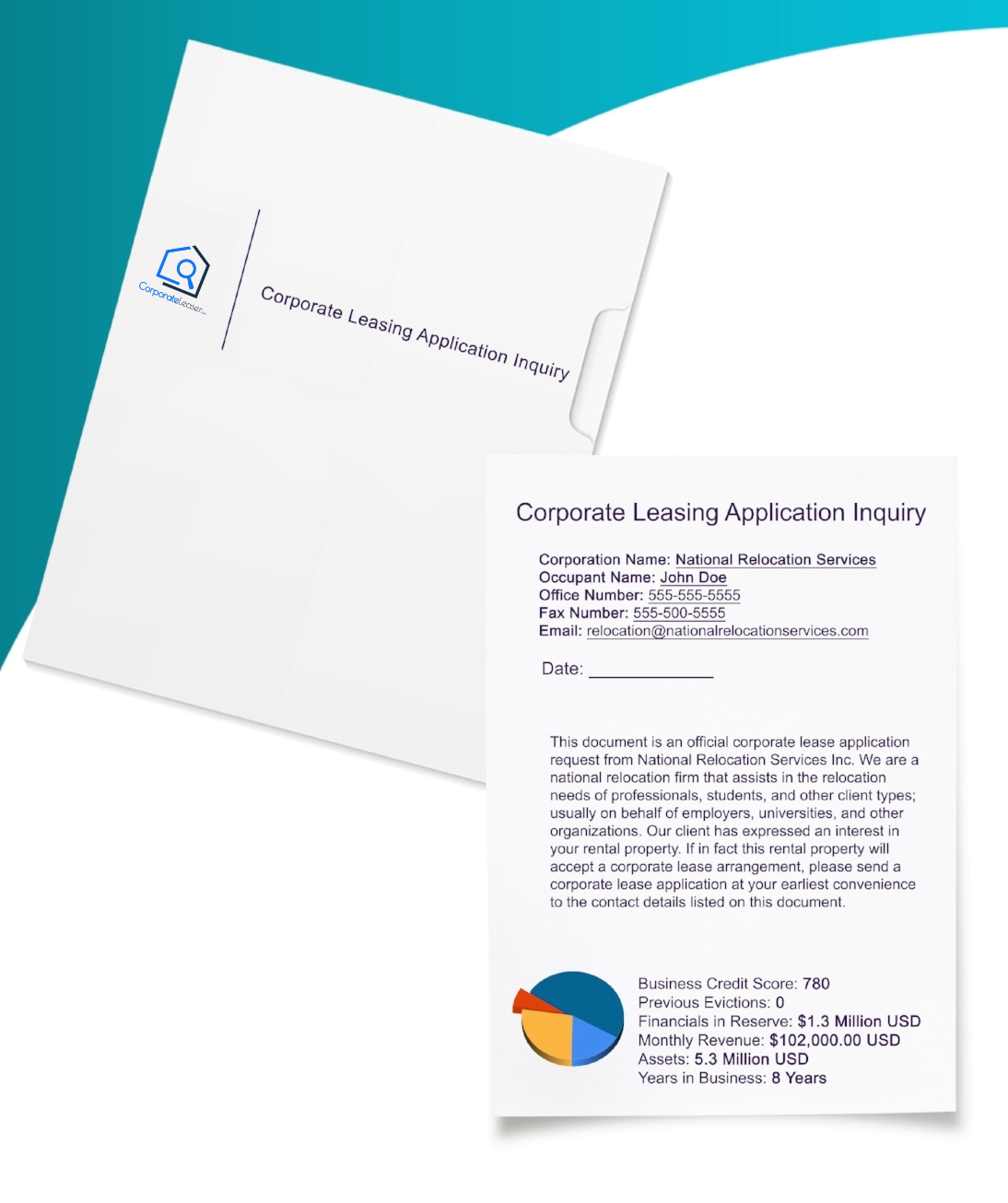
CorporateLeaser.com publicly describes a Second Chance Housing Program through corporate leasing. In the company’s stated model, a company may use its business profile and supporting information to submit a rental application on behalf of a client. That description is the company’s process, not a universal legal rule, and it does not guarantee approval, a particular apartment, or that every landlord will skip personal screening.
The practical lease question is still the same: who signs, who pays, and who is accountable? Before sharing documents or paying a fee, ask Corporate Leaser and the property for current written terms, approval requirements, all charges, the contracting parties, refund conditions, and what happens if the property does not accept the structure. The public Corporate Leaser home page is a useful next step for the current description and support options. You can also review the corporate leasing application route, but confirm availability before relying on it; online pages can change.
For clarification, the site directs readers to support at 1-844-263-2287 and its contact and application routes. Do not treat a corporate leasing service as a substitute for reading the property’s lease. The signed agreement controls your occupancy obligations.
A careful signature is a stronger starting point
Credit challenges can make a housing search stressful, but urgency is not a reason to accept unexplained terms. Compare the full cost, confirm the parties, understand screening, and mark the clauses that govern default and exit. If the agreement is confusing, take it to qualified legal aid or a housing attorney before signing.
Sources and review note
- HUD Public Housing Occupancy Guidebook: Lease Requirements
- CFPB: What is a tenant screening report?
- FTC: Using Consumer Reports: What Landlords Need to Know
Information about Corporate Leaser services reflects the public website and should be confirmed with Corporate Leaser before relying on current pricing, availability, screening, or program terms.